The Future of Indie Publishing: Forecasting Trends 2026–2031
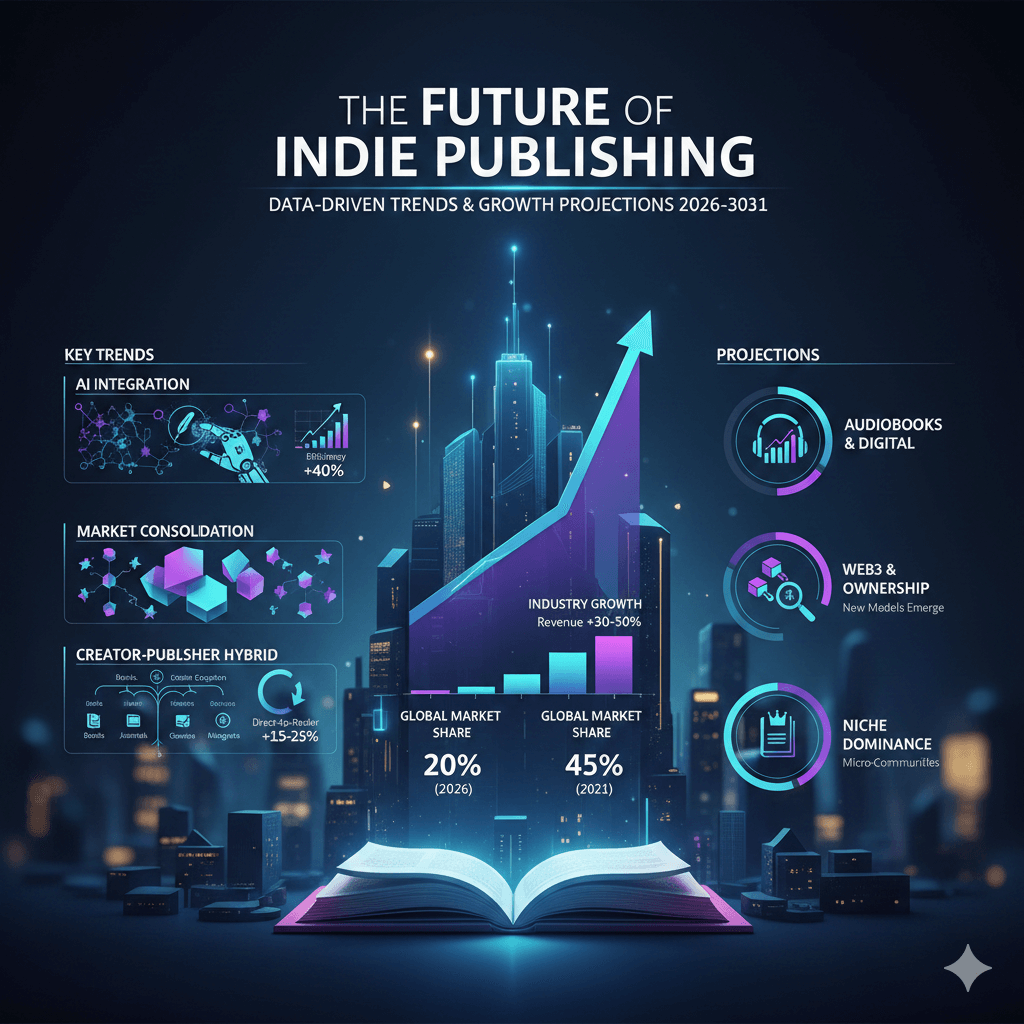
Conceptualized by Valerie G. Woods; Rendered by Gemini AI.
Why Indie Publishing Is Accelerating
Publishing is changing drastically, and this is good news for indie authors. With AI accelerating in every corner of content creation, global reader demand shifting, and digital platforms evolving faster than traditional publishing can keep up, the next five years will redefine what's possible for independent creators.
This article serves as a foundational overview of how indie publishing is evolving between now and 2031. It examines the structural shifts shaping the industry: from platform economics and reader behavior to AI-driven workflows and direct-to-reader models. The articles linked throughout this guide explore these themes in greater depth, offering practical insights into the tools, strategies, and decisions indie authors will need to navigate the next decade. It is part of my series for indie authors and examines the significant changes, reader habits, and opportunities for success in self-publishing through 2031.
This article provides a high-level view of the structural shifts reshaping indie publishing through 2031. In the next articles, we’ll examine two forces in more detail: how digital marketplaces determine visibility and revenue, and how AI is reshaping the operational side of publishing.
Let's dive in.
Table of Contents
- The Macro Shifts Driving Indie Publishing Growth
- AI: The New Publishing Infrastructure
- Reader Behavior Is Changing — Fast
- Market Segment Predictions (2026–2031)
- The Creator-Publisher Hybrid Model
- Sustainability, Paper Costs & Print-On-Demand Trends
- Action Steps Indie Authors Should Take Now
- Key Changes of AI-Driven Publishing
- FAQ: The Real Risks Behind Indie Publishing Growth
- Strategic Takeaway for Indie Author
- References and Resources
Short on time? Download a PDF copy of this article, and if you want help making strategic, ethical decisions about which AI tools make sense for your publishing, download The Future of Indie Publishing.
The Macro Shifts Driving Indie Publishing Growth
Publishing experiences growth, yet not uniformly. The publishing industry is changing, with traditional methods slowing and self-publishing speeding up.
1. The End of Gatekeepers
For more than a century, a small group of houses controlled what got published. That era is ending. Between Amazon KDP, IngramSpark, digital marketplaces, and direct-to-reader ecosystems (Squarespace, Shopify, Gumroad, Substack), authors no longer need permission to build a publishing career.
Research from the Author's Guild and independent publishing platforms shows that self-published titles now account for approximately 25–30% of the total book market, with indie ebook sales growing at twice the rate of traditionally published ebook sales. This structural shift means talented authors are no longer competing for limited publishing slots—they're building their own platforms.
2. The Creator Economy Explosion
People are now more likely to trust and learn from creators than from traditional sources. This preference spans education, entertainment, fitness, wellness, and personal development. Publishing is no different.
Platforms like Substack, YouTube, TikTok, and podcast networks have trained readers to follow individual voices and expertise. Indie authors who build direct relationships with their audiences through email lists, social platforms, and community engagement generate higher lifetime reader value and stronger book sales than those relying solely on traditional retail channels.
3. Direct-to-Reader Commerce Is Surging
Platforms like Shopify, Squarespace, and Gumroad are moving writers into a world where:
Authors own their audiences
Authors get paid directly (without platform cuts)
Email lists become the most valuable asset
Creators build ecosystems, not single products
Early data from direct-sales platforms suggests that by 2031, direct-to-reader sales will likely represent 15–25% of indie author revenue, with some niches (particularly self-help, workbooks, and children's books) seeing even higher percentages. This creates sustainable, author-controlled businesses rather than dependency on algorithmic visibility.
AI: The New Publishing Infrastructure
The most significant shift from 2026 to 2031 will be the rise of AI as the invisible backbone of publishing.
AI will not replace authors — it will replace authors who refuse to use it.
1. AI as a Co-Writer & Research Assistant
In the next five years, no indie author will have to research manually. AI speeds up:
Market research (identifying reader pain points, trending topics, competitor positioning)
Competitor comparison (analyzing what's working in your niche)
Trend forecasting (understanding where reader demand is moving)
Audience profiling (defining who your ideal reader is in great detail)
Outline development (structuring complex ideas into logical flows)
World-building (for fiction authors, creating cohesive fictional systems)
Fact-checking (verifying claims, catching inconsistencies)
This means faster drafting, higher accuracy, and more consistent quality without sacrificing the human insight and authentic voice that readers actually want.
2. Hybrid Writing Will Become Normal
Authors who succeed will adopt a hybrid model:
Human voice + AI-supported structure = maximum clarity and speed
AI drafts will be refined, reinterpreted, and humanized by the author's unique style. The most effective approach treats AI as a thinking partner that speeds up research and ideation. The author remains responsible for depth, authenticity, and the distinctive perspective that makes their work valuable.
3. Editing Will Be Transformed
AI will:
Identify pacing issues (too slow, rushed, uneven rhythm)
Improve clarity (simplifies dense passages without losing nuance)
Catch plot holes (inconsistencies in character motivation, timeline, logic)
Elevate sentence rhythm (variation in length, flow, and impact)
Check tone consistency (ensuring the voice remains coherent throughout)
Developmental editing, once the exclusive province of expensive editors, becomes widely accessible. This democratizes quality, allowing indie authors to compete with traditionally published books on editorial polish.
4. AI in Book Design
Between 2026 and 2031, AI will help authors create:
Branded cover systems (multiple titles with cohesive visual identity)
Consistent illustration styles (especially valuable for children's books)
Optimized layouts (responsive design across formats and trim sizes)
Accessibility-aware interiors (ensuring readability for all readers)
Multiple trim sizes instantly (paperback, hardcover, large print, ebook)
Heatmaps will help you see which covers people will like before you publish, so you don't have to guess when making an important choice.
5. Translation Becomes Affordable
AI multilingual tools will deliver high-quality translations in seconds. Indie authors will unlock new territories at no cost. Being able to share knowledge worldwide with no need for traditional publishers is essential for authors who understand multiple cultures or languages.
Sign up to start with practical tools that actually help from the Free Resources Vault
Reader Behavior Is Changing — Fast
Understanding how readers consume, discover, and decide to purchase books is essential. The patterns emerging right now reveal what will dominate 2026–2031.
1. Micro-Knowledge & Fast Solutions
Readers want practical, immediately actionable information. The rise of anxiety, overwhelm, and information overload means consumers now prioritize:
Instant solutions (frameworks they can apply today)
Clear frameworks (mental models that organize complexity)
Step-by-step guides (removing ambiguity about implementation)
Redesignable worksheets (making content personally relevant)
Checklists (reducing cognitive load)
Templates (accelerating real-world application)
Books that solve specific problems, not those that theorize about them, win reader loyalty and strong word of mouth. Therefore, micro-niches (parenting a bully, OCD for couples, meal planning for seniors with diabetes) outperform broad-category books.
2. Emotional Support is Becoming Mainstream
Books about mental health, parenting, relationships, anxiety, and emotional regulation are rising sharply. Research in clinical psychology and neuroscience shows that readers seek content that's not only informative but emotionally validating and practically grounded.
Indie authors win here because they can create resources that are:
Practical (solutions readers can implement immediately)
Empathetic (written from lived experience, not clinical distance)
Lived-experience-informed (drawing on real-world application, not theory alone)
Highly actionable (with worksheets, exercises, and tracking tools)
Indie authors gain credibility by understanding reader needs and structuring content for change.
3. Children's Books Are Surging
This sector will see explosive growth through 2031. Categories driving demand include:
Educational picture books (learning embedded in story)
SEL (social-emotional learning) focused titles
Activity books (engagement + learning)
Coloring books (therapeutic, accessible, multi-age appeal)
Travel and culture books for kids (expanding worldview)
Early learning (phonics, numbers, concepts)
Easy science (making STEM accessible and fun)
Creative problem-solving (developing resilience and critical thinking)
Parents are seeking quality, convenience, and engaging activities. Indie authors can deliver faster and more creatively than traditional publishing. The children's market has become one of the most lucrative indie segments precisely because parents value practical, accessible, beautifully designed resources.
4. Niche Fiction Markets Are Escalating
Romantasy, cozy mysteries, cozy fantasy, short-form romance, and serialized fiction will see tremendous growth. Readers want:
Comfort (escapism that soothes rather than stresses)
Escapism (clear separation from real-world anxiety)
Emotional connection (characters that feel real, stakes that matter)
Bingeable series (multiple books creating sustained engagement)
Indie authors excel because they publish fast, write what people like, and connect with niche audiences better than traditional publishers, who are slower.
Want help deciding which platforms actually fit your books? Download the Future of Indie Publishing Worksheet.
Many of these trends point to one central asset—your website see How to Build an Author Website That Actually Works.
Market Segment Predictions (2026–2031)
1. Children's Books & Activity Books
This category will remain one of the highest-opportunity sectors for indie authors. Growing demand includes:
Emotional regulation (teaching children to understand and manage feelings)
Multicultural literacy (representation across cultures, abilities, and family structures)
Real-world skills (practical life skills taught through story)
STEM made simple (science and technology without jargon)
Bedtime mindfulness (calming routines that support sleep)
Coloring + rhyme combinations (engagement across learning styles)
Travel and world exploration (curiosity and cultural awareness)
Parents want books that entertain AND educate. Books that reflect diverse families and that support their children's emotional development. Indie authors meeting this demand will continue to see strong sales.
2. Self-Help & Mental Health
Driven by rising anxiety, family stress, and digital overwhelm, self-help will continue to expand dramatically. The winners will offer:
Structured systems (precise method, not vague inspiration)
Frameworks (mental models that organize complexity)
Step-by-step plans (removing ambiguity about implementation)
Therapeutic coloring (combining visual engagement with emotional regulation)
Journals (guided reflection with a clear purpose)
Habit tracking resources (making progress visible and tangible)
Emotional wellness toolkits (comprehensive, multi-modal support)
This segment rewards specificity. A book on "anxiety management for busy parents" sells more copies than "managing anxiety" because it acknowledges real-world constraints and addresses a specific psychological reality.
3. Adult Coloring Books
Far from fading, coloring is entering its next era, grounded in psychological research. Coloring activates the parasympathetic nervous system response (the body's calm-down mechanism). Increasingly valued by readers for managing stress, trauma, and overwhelm.
Growth categories include:
Therapeutic coloring is rooted in psychology (designed with nervous system science in mind)
Niche themes (food, nature, retro, affirmations, mandalas)
Grief therapy coloring (supporting emotional processing)
Trauma-informed coloring (accessible, grounding-focused design)
Mindfulness sets (combining coloring with guided practices)
ERP-based therapeutic coloring (exposure and response prevention techniques adapted for visual engagement—an innovation that merges clinical method with creative practice)
4. Nonfiction Micro-Niches
Small niches equal enormous opportunities. Successful micro-niche books share these characteristics:
Hyper-specific (solving a precise problem for a defined audience)
Practical (immediately applicable, not theoretical)
Solution-oriented (removing obstacles to implementation)
Keyword-aligned (discoverable through search)
Rapidly updated (growing with your audience's needs)
Examples: "meal planning for seniors with type 2 diabetes," "parenting a bully," "OCD for couples," "how to set boundaries with adult children," "managing ADHD in your marriage," "raising a gifted anxious child."
These titles work because they combine expertise with specificity (meeting readers where their actual problems are). They're discoverable, resonate deeply with their target audience, and command stronger loyalty than broad-category books.
5. Fiction
Key growth categories:
Short-form romances (high-engagement, quick reads)
Episodic fiction (serialized, building community and anticipation)
Cozy genres (mystery, fantasy, romance that prioritize comfort)
Fan-driven worlds (authors building beloved fictional universes that readers engage with repeatedly)
Cross-media storytelling (books + podcasts, books + social media narrative, books + interactive content)
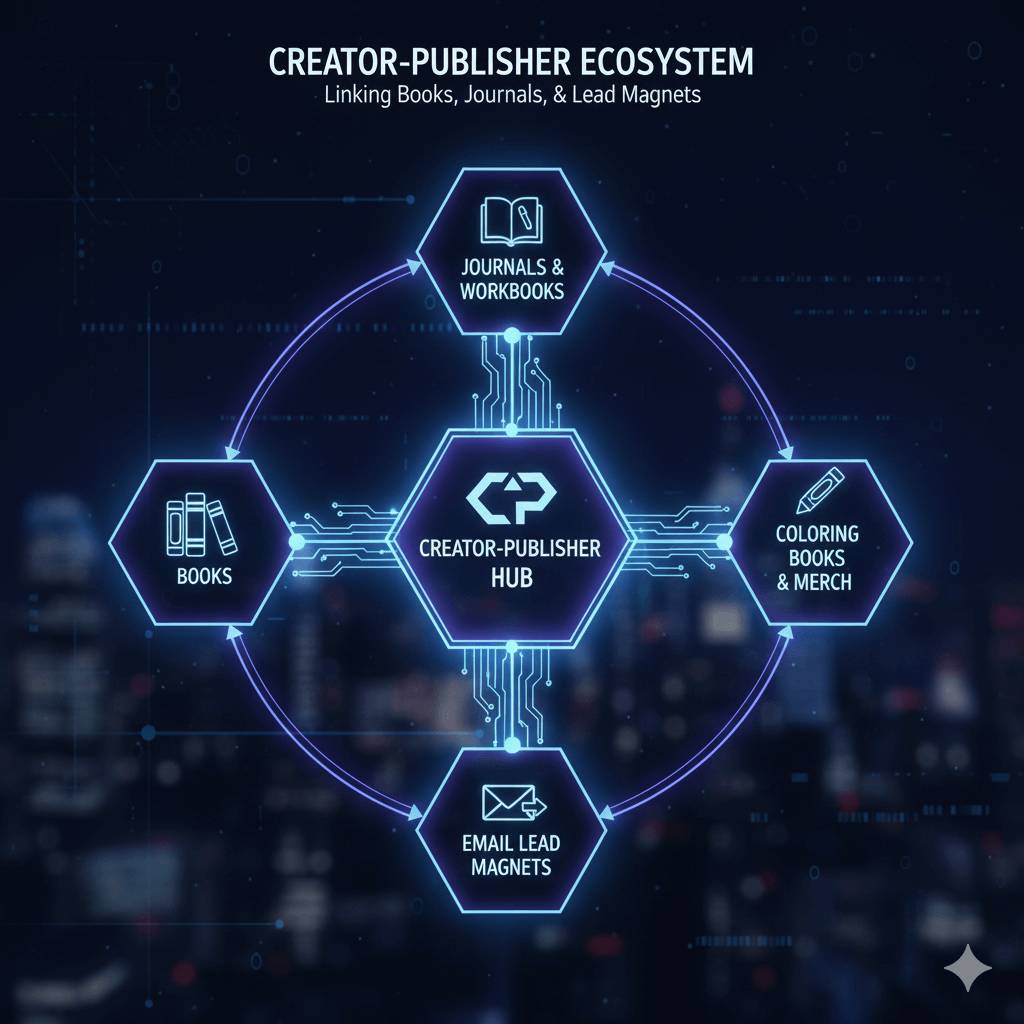
AI-generated infographic. Visualized using Gemini's Nano Banana model.
The Creator-Publisher Hybrid Model
The next generation of successful indie authors will not publish only books.
They will publish Ecosystems.
Think beyond single titles. Successful indie authors 2025–2030 will offer:
Books (traditional format)
Journals (guided reflection, tracking)
Coloring books (therapeutic engagement)
Guided workbooks (applying frameworks with structure)
Downloadable templates (immediate implementation tools)
Audio versions (expanding accessibility and consumption options)
Pinterest content (visual discovery, SEO strategy)
Blog articles (thought leadership, search traffic)
Email sequences (nurturing leads, building relationships)
Courses (more targeted teaching, higher price point)
Resource libraries (comprehensive, bundled value)
Brand partnerships (expanding reach, creating revenue streams)
Case in point: An indie author writing about anxiety management for parents can offer a core book, a downloadable "anxiety toolkit" PDF, a therapeutic coloring book companion, a 10-email sequence for their newsletter, weekly Pinterest pins targeting "parenting anxiety," and eventually a course on "building family resilience." Each format serves different consumption preferences and price points, multiplying revenue per reader while strengthening audience loyalty.
Indie authors who build multi-format content around their books will become "creator-publishers," running micro digital publishing companies. This model is already emerging—and will dominate 2025–2030.
Sustainability, Paper Costs & Print-On-Demand Trends
1. Paper Inflation Will Continue
Paper costs have increased 40–60% since 2020 and will remain volatile due to supply chain pressures and environmental factors.
This means:
Higher POD printing costs (eating into margins)
Thinner paper options (maintaining page counts at lower costs)
Slight price increases for paperbacks (passing costs to readers)
Indies must manage margins strategically. This advantage goes to authors who understand their unit economics and aren't afraid to adjust pricing or pivot toward digital formats with higher margins.
2. Digital Purchases Will Rise
As costs rise, ebooks and downloadable PDFs will become more popular, especially globally. Squarespace and Shopify will become primary storefronts for indie authors selling digital content.
The combination of rising paper costs + reader preference for digital = a structural shift toward ebook and downloadable content. This favors indie authors with direct-sales infrastructure and email lists.
3. Sustainability Matters
Consumers, especially millennials and Gen Z, prefer:
Recycled paper
Eco-friendly inks
Digital formats
Companies with transparent sustainability practices
Authors who highlight sustainable practices will stand out in a crowded market. This is relevant for coloring books and activity books where parents are explicitly choosing sustainable options for their children.
These shifts also impact where and how authors sell—explored in Digital Marketplaces by 2031: Amazon, Shopify, Squarespace & Direct-to-Reader Publishing
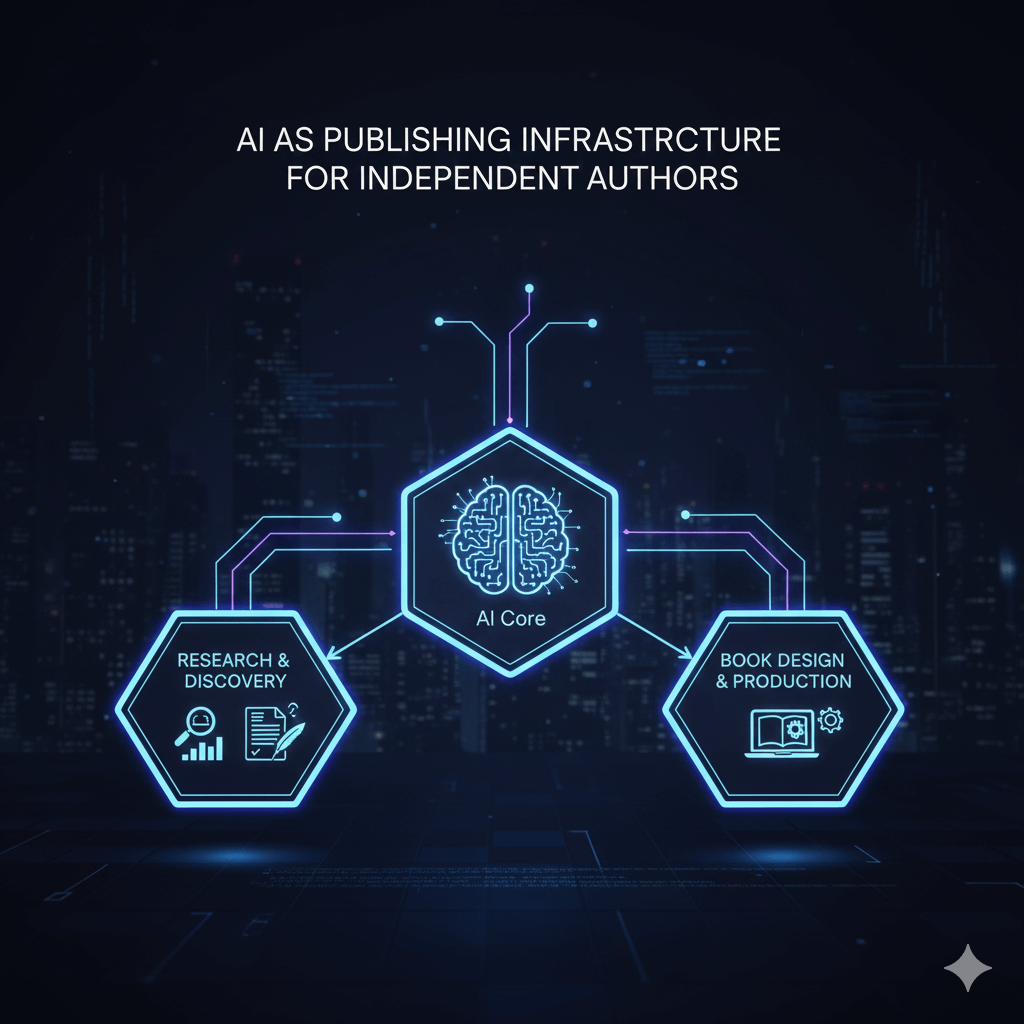
AI-generated infographic. Co-created with Gemini’s Nano Banana model.
Action Steps Indie Authors Should Take Now
Here's how to future-proof your publishing business between 2026–2031:
1. Pick a Clear Niche + Subniche
Success comes from focus, not broad reach. The riches are in the niches—and the riches within niches are in the sub-niches. My Matrix Model Framework is built on this principle: specificity creates depth, and depth creates authority.
2. Use AI as Your Infrastructure
AI should support your:
Research (market analysis, trend identification, competitor positioning)
Outlining (organizing complex information into logical structures)
Drafting (generating rough content that you refine and humanize)
Editing (identifying issues you then address with your unique voice)
Marketing (SEO optimization, ad copywriting, content planning)
Pinterest pin creation (visual content at scale)
Design (cover concepts, layout exploration)
AI is your co-pilot, not your replacement. The authors who win with AI are those who use it to amplify their expertise, not to outsource their thinking.
3. Build a Lead-Magnet Ecosystem
Your email list is your most valuable asset, more valuable than any algorithm, platform, or bestseller list. Offer:
Free PDFs (excerpts, frameworks, checklists)
Journals (guided, valuable, shareable)
Coloring pages (particularly effective for building lists around children's and wellness content)
Resource libraries (consolidated, bundled value)
Checklists and templates (immediately useful, reducing friction to sign up)
Each lead magnet should ladder toward your core offer (your book, course, or premium resource).
4. Publish in Multiple Formats
Don't stop at one book. Build your ecosystem:
Workbook (deepening engagement)
Journal (ongoing relationship with your content)
Coloring book (expanding format options, reaching different audiences)
Audio companion (accessibility, consumption flexibility)
Mini-guide (quick-reference, highly shareable)
Pinterest pin batch (visual discovery, SEO)
Blog series (thought leadership, search traffic)
Online course (deeper teaching, higher price point)
Strategic multi-format publishing increases lifetime reader value and strengthens your position as a comprehensive authority in your niche.
5. Develop a 12-month Publishing Plan
Plan series launches, new editions, and content updates. Consistency beats inspiration. A well-planned release schedule (one book + companion content every 6–12 months) builds reader anticipation and strengthens your authority positioning.
6. Leverage Pinterest + SEO
Search-based content is the future of book discovery. Pinterest is essentially a visual search engine where niche audiences actively look for solutions. Content optimized for search (in your blog, books, Pinterest pins, and email) captures readers already looking for what you offer.
AI is rapidly changing how authors create and manage content—see The Rise of AI in Publishing: Opportunities, Risks & Strategic Advantages for Indie Authors (2026–2031) for a broader strategic perspective.
Sign up to start with practical tools that actually help from the Free Resources Vault
Key Changes of AI-Driven Publishing
If you're an indie author, the future is not something to fear; it's something to embrace. The authors who won 2026–2031 share consistent qualities: they're adaptable, strategic, research-driven, audience-aware, and empowered by AI.
But here's what matters most: the structural shifts we've outlined all point to one fundamental reality. The gatekeeper era has ended, and authority now comes from depth, specificity, and direct relationships with your audience.
Traditional publishing took 2–3 years to develop, vet, and launch a book. You can now research, write, design, and publish in 90 days. Traditional publishing needs bestseller volume. You can build a sustainable business in a micro-niche. Traditional publishing relies on retail visibility. You can own your distribution and build direct reader relationships.
These aren't marginal advantages. They're structural advantages, and they belong to authors who see themselves as creator-publishers building ecosystems, not one-off book writers waiting for the next publication cycle.
The future of indie publishing isn't just bright; it belongs to authors who are ready to step into it with clarity and intention.
And if you're reading this, you're already doing that.
Clearly, 2026–2031 is a pivotal moment for indie publishing because of the availability of multi-platform publishing for indie authors.
For more info, read my articles: "Digital Marketplaces in 2031" and "AI in Publishing: Opportunities, Risks & Advantages for Indie Authors."
To survive this shift, authors need a Chief Strategy Officer... or "Using AI for strategic analysis..."
Download the Future of Indie Publishing Worksheet. A free worksheet to map your personal publishing strategy through 2031.
Strategic Takeaway for Indie Author
Indie publishing remains viable—but not accidental.
Long-term success favors authors who:
Build direct reader relationships
Diversify formats and revenue streams
Use AI ethically and strategically
Prioritize sustainability over speed
Design ecosystems, not one-off books
Indie publishing is no longer about publishing faster.
It is about publishing smarter, deeper, and with intent.
These challenges are real—but they do not invalidate indie publishing. They clarify it.
The authors best positioned for long-term success are not those chasing every algorithmic trend, but those building defensible ecosystems: clear niches, direct reader relationships, diversified formats, ethical AI use, and sustainable publishing rhythms.
Indie publishing is no longer about speed alone.
It is about intentional design, creative integrity, and strategic resilience.
Next, I will cover: how Amazon, Shopify, Squarespace, and direct-to-reader models will shape indie publishing economics through 2031.
Then: how AI is becoming the operational infrastructure behind modern indie publishing.
FAQ: The Real Risks Behind Indie Publishing Growth
Indie publishing is expanding rapidly—but growth brings trade-offs. This FAQ addresses the most common concerns authors raise about AI, algorithms, market saturation, and sustainability.
These risks are real. They are also manageable when authors build intentionally rather than chasing trends.
Will data-driven publishing lead to homogenized content?
Yes, homogenization is a real risk.
When authors rely too heavily on algorithmic signals—popular tropes, proven subgenres, and short-term trends—the market can flood with derivative work.
Algorithms reward what already worked. They are far less effective at identifying what hasn’t existed yet.
Data should guide positioning, not replace originality.
Is self-publishing flooded with low-quality books?
Yes, market saturation has increased dramatically.
Low barriers to entry mean readers face a growing volume of rushed, unedited, or low-effort titles, making quality harder to discover.
Professional presentation now matters more than ever.
Discoverability depends on differentiation, not volume alone.
Does AI threaten the value of authorship?
It can—if used without strategy.
Generative AI lowers production costs and increases content volume, potentially depressing perceived book value in crowded niches.
Authors who rely on AI without adding depth, voice, or lived insight risk becoming interchangeable.
AI amplifies expertise—it does not replace it.
Are indie authors still truly “independent” if platforms dominate?
Not entirely.
While authors avoid traditional gatekeepers, many remain dependent on a few major platforms for visibility and income.
Algorithm changes or policy shifts can disrupt earnings overnight.
Independence increases with diversified distribution and direct reader access.
Is Kindle Unlimited financially sustainable for most authors?
It is unstable as a sole source of income.
Subscription payouts depend on shared global funds that shrink per-page earnings as participation grows.
KU works best as one component of a broader revenue strategy.
Subscription income should supplement—not replace—direct sales.
Does algorithmic personalization limit book discovery?
Yes, personalization creates echo chambers.
Recommendation engines favor familiar patterns, reinforcing genre expectations and limiting exposure to unconventional or cross-genre work.
This can suppress innovation.
Algorithms optimize efficiency, not creative diversity.
Is the rapid-release culture causing author burnout?
Yes, burnout is increasingly common.
The pressure to publish constantly for algorithmic visibility often leads to exhaustion, reduced creative satisfaction, and declining quality.
Sustainable publishing favors pacing and systems—not constant output.
Longevity beats speed.
Can readers trust authenticity in an AI-driven publishing era?
Trust is becoming a central issue.
AI-generated text, synthetic narration, and deepfake media raise unresolved questions about authorship, copyright, and transparency.
Clear disclosure and ethical use will shape future reader confidence.
Authenticity is becoming a competitive advantage.
Are rising editing and design costs recreating barriers to entry?
Yes, financial barriers still exist—just differently.
As content volume grows, demand for skilled editors and designers rises, increasing the cost of professional-quality books.
The gatekeeper has shifted from permission to capital.
Strategic planning reduces upfront risk.
Does paid advertising determine indie publishing success?
Visibility increasingly requires investment.
In crowded marketplaces, ads often drive consistent discovery. While quality is essential, sustained income usually involves paid promotion.
Organic reach alone is rarely sufficient at scale.
Visibility is a business expense, not a shortcut.
The authors who succeed will connect strategy to structure—starting with How to Build an Author Website That Actually Works.
References and Resources
Market Research & Publishing Data
Author's Guild - Comprehensive research on author income, publishing trends, and the evolving publishing landscape. https://www.authorsguild.org/
WordsRated - Independent publishing market analysis and self-publishing data. https://wordsrated.com//
Amazon KDP - Self-publishing platform with insights on indie author trends. https://kdp.amazon.com/
IngramSpark - Print-on-demand and distribution platform for indie authors. https://www.ingramspark.com//
Creator Economy & Direct-to-Reader Platforms
Substack - Email newsletter platform where writers build direct relationships with readers. https://substack.com/
Shopify - E-commerce platform for indie authors selling books and digital products directly. https://www.shopify.com/
Squarespace - Website builder with integrated shop functionality for indie creators. https://www.squarespace.com/
Gumroad - Digital product platform for creators selling books, courses, and resources. https://gumroad.com/
AI Tools for Authors
Claude (Anthropic) - Advanced AI for research, writing, editing, and strategic content planning. https://claude.ai/
ChatGPT (OpenAI) - General-purpose AI for drafting, brainstorming, and editing. https://chatgpt.com/
Grammarly - AI-powered writing assistant for tone, clarity, and consistency. https://www.grammarly.com/
Midjourney - AI image generation for cover concepts and design exploration. https://www.midjourney.com/
Book Design & Production
Canva - Design tool with templates for book covers, interiors, and marketing materials. https://www.canva.com/
Adobe Creative Suite - Professional design and layout software. https://www.adobe.com/
Draft2Digital - Ebook formatting and distribution platform. https://www.draft2digital.com/
SEO & Content Discovery
Pinterest for Authors - A Visual discovery platform where readers actively search for book-related content. https://www.pinterest.com/
Google Search Console - Track search performance and optimize for discoverability. https://search.google.com/search-console/
Ahrefs - SEO research tool for keyword analysis and competitor research. https://ahrefs.com/
SEMrush - Comprehensive SEO and content marketing platform. https://www.semrush.com/
Psychological & Therapeutic Research
American Psychological Association (APA) - Research on mental health, anxiety, and emotional regulation. https://www.apa.org/
National Institute of Mental Health (NIMH) - Government research on mental health conditions and treatments. https://www.nimh.nih.gov/
International OCD Foundation - Resources and research on OCD and related conditions. https://iocdf.org/
Polyvagal Theory & Nervous System Regulation - Research on how activities like coloring support parasympathetic activation. https://en.wikipedia.org/wiki/Polyvagal_theory
Children's Book & Educational Resources
Society of Children's Book Writers and Illustrators (SCBWI) - Professional organization with market trends and resources. https://www.scbwi.org/
Collaborative for Academic, Social, and Emotional Learning (CASEL) - Research on social-emotional learning (SEL) in education. https://casel.org/
Children's Book Council - Industry data and standards for children's publishing. https://www.cbcbooks.org/
Sustainability in Publishing
Sustainable Packaging Coalition - Resources on eco-friendly printing practices. https://www.sustainablepackaging.org/
Green Press Initiative - Environmental standards for printing and publishing. https://www.greenpressinitiative.org/
FSC Certified Paper - Information on sustainable forestry and certified paper options. https://fsc.org/
Email Marketing & Audience Building
ConvertKit - Email platform designed for creators and authors. https://convertkit.com/
ActiveCampaign - Email marketing with automation and audience segmentation. https://www.activecampaign.com/
Mailchimp - Accessible email marketing platform for building reader relationships. https://mailchimp.com/
Publishing Statistics & Trend Reports
Statista Publishing Industry Reports - Market research on publishing, reading habits, and ebook trends. https://www.statista.com/
Publishers Weekly - Industry news and market analysis. https://www.publishersweekly.com/
The Bookseller - UK and international publishing news and data. https://www.thebookseller.com/
This article is part of my comprehensive indie author resource series, including "Parenting and Self-Help Books," "100+ AI Prompts for Indie Authors," and specialized guides for nonfiction, children's books, and fiction authors. All resources are available as free PDF downloads and low-cost ePubs.
Looking for the worksheet mentioned in this. or any other article? It is waiting for you inside my Free Resource Vault. Join the Inner Circle for Access
My AI Partnership Disclosure:
I believe the future of publishing belongs to authors who leverage every tool at their disposal. In that spirit, I use AI unashamedly as publishing infrastructure. I researched this article, while the conceptual diagrams were co-created with Gemini AI. By integrating these tools, I can provide higher-quality visualizations than I could on my own. AI is my assistant; the vision is 100% mine.
Note: I do not use affiliate links. I share resources solely to be helpful to my readers and to build a foundation of trust as I grow this community.